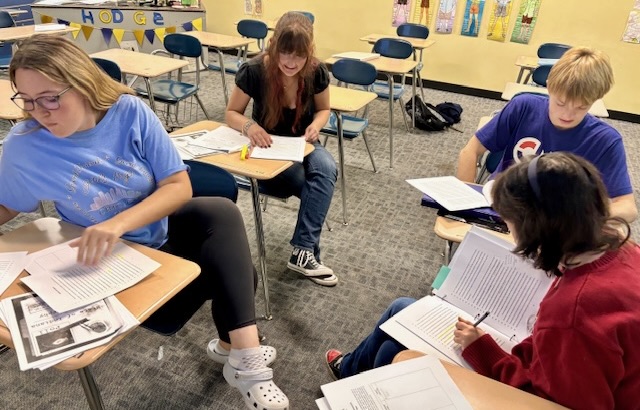
Greenfield-Central High School students are becoming criminal investigators and lawyers in new opportunities that explore true crime.
True Crime is a new English class to analyze real-life crimes and debate those who were prosecuted.
An after-school activity is also available: Mock Trial Club gives GC students the chance to look into a fictional case and take on the roles of attorneys and witnesses to develop arguments and think critically on both sides.
Both are opening up opportunities for students to learn in new ways, thanks to teacher Amanda Hodge who leads both the class and the club.
“Students will follow the right educator, regardless of the club or activity. In Ms. Hodge’s situation, you have a gifted teacher who is smart, funny and has a way of making students more curious about the world around them,” said Principal Dan Walbaum. “Her Mock Trial Club students are using logic, critical thinking, public speaking, and improvisational skills. I am confident this club will continue to grow in popularity.”
Likewise, Walbaum said, the True Crime class is a great example of how the GCHS English department tailors learning to student interests.
Class develops real-world critical thinking
True Crime is one of several new courses offered by the GCHS English department.
Juniors and seniors can choose Horror Literature, Dystopian Literature, Short Stories, True Crime or Honors World Literature.
In addition to those new courses, GC students can also take long-standing favorites like Film Literature, Sports and Society, Science Fiction, Etymology, Epic Heroes and Critical Thinking.
“Students have really appreciated the opportunity to take a class in something they already have an interest in,” shared Brent Oliver, English department chair at GCHS. “If it’s something they enjoy, they are always more likely to pay attention and complete the work, which certainly helps them earn credits to get to graduation.”
Senior Cassady Oakes can attest to that. She said she’s often had a hard time focusing in class, but True Crime captures her attention.
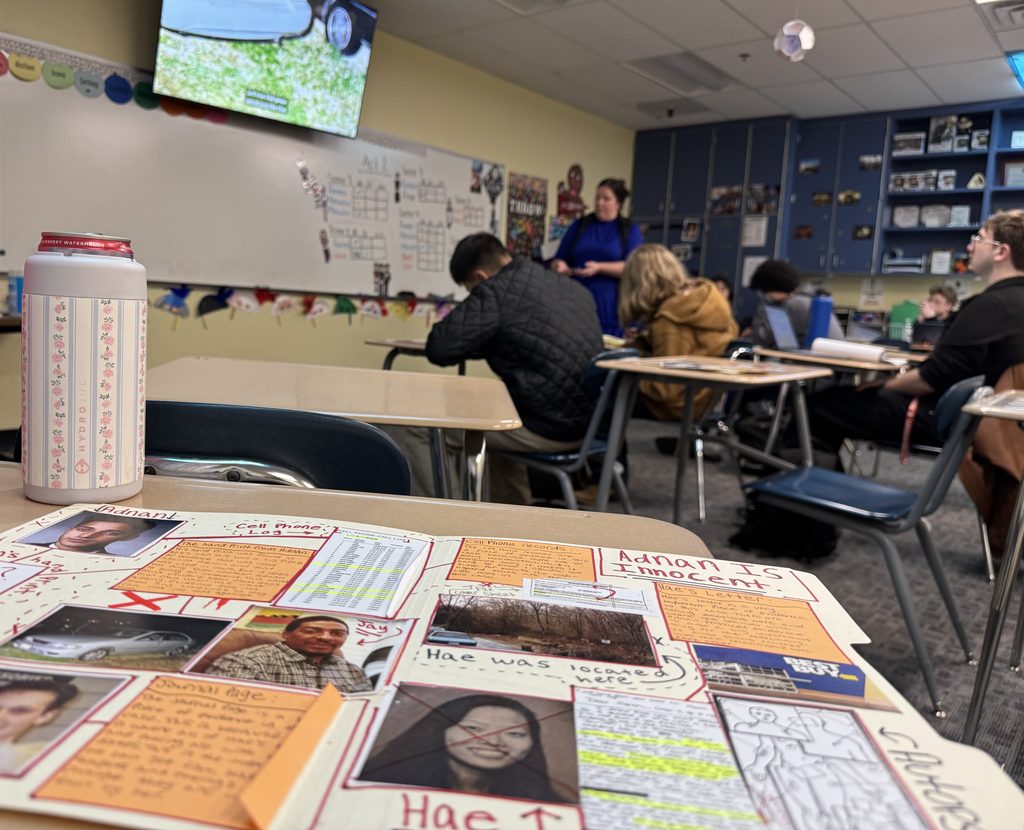
Teacher Amanda Hodge has students reading “Catch Me if You Can” and also studying the “Serial” podcast of the murder investigation of Hae Min Lee. Students compare timelines, evaluate witness statements, consider forensic evidence and examine questions surrounding the investigation and trial.
The class is anything but dry, students say.
“She is my favorite English teacher I’ve ever had,” Oakes said.
Nevaeh Wethington and McKenzie Jones agree. Wethington said she comes to the class so excited for what she’s going to learn. For Jones, it feels less like a class, and more like a group discussion.
“Ms. Hodge understands your point of view; even if she doesn’t agree with it, she doesn’t put you down,” Jones said.
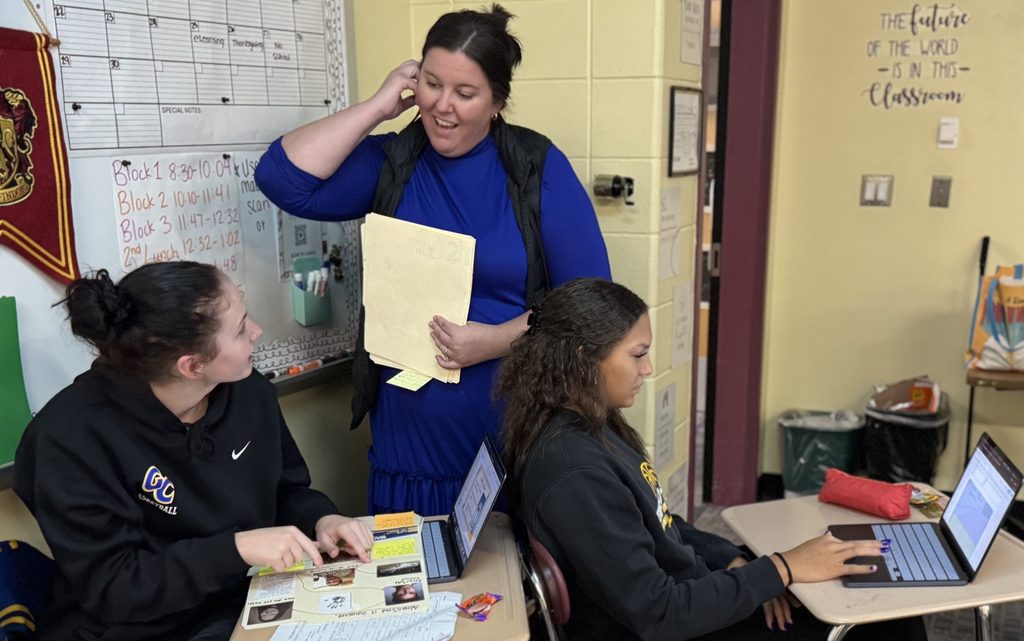
True crime has sparked Hodge’s attention as well. As an English teacher, Hodge says she is interested in how people tell stories; how arguments are constructed; and how evidence is used to support a claim. True crime raises important questions about perspective, credibility, bias and how actions can be proven.
“Each year in True Crime, I get to watch students engage with cases that impact the world around them,” she said. “They learn how the jury system works, how evidence is presented, and why it is important to keep asking questions, even when something initially seems like an open-and-shut case. I think these experiences foster real-world critical thinking skills that are valuable in every classroom and beyond.”
Club fosters debate, career exploration
In addition to the True Crime class, any GC student can check out Mock Trial Club.
The club meets Wednesdays after school and gives students the opportunity to work as attorneys and witnesses in a simulated court case.
Students learn how to develop arguments, question witnesses, analyze evidence and think critically. Coming up in February is a regional competition through the Indiana High School Mock Trial Program of the Indiana Bar Association.
“My former school had a Mock Trial team, and I was so jealous,” Hodge said of why she brought the new club to GCHS. “I did not have that kind of opportunity while I was in high school, and I know I would have been eager to join. When I realized that GCHS did not have the club, I started researching how to get started. The club allows students to explore interests they might not otherwise get to experience in high school classes. With the support of our administration and the involvement of local attorneys, we were able to bring the club to GCHS this year.”
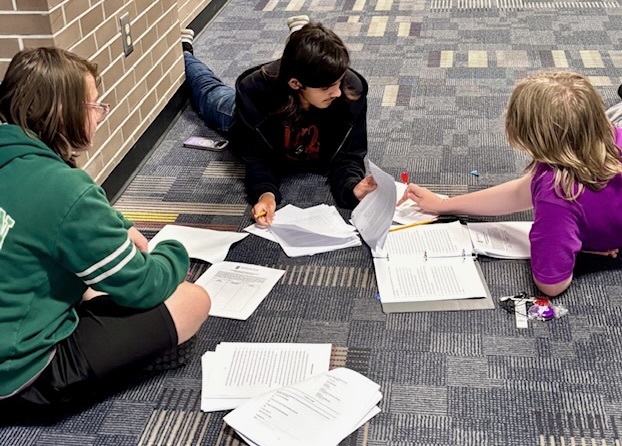
About a dozen students regularly attend meetings, and 18 students join in through Google Classroom. Hodge is flexible because many are involved in a variety of extracurricular activities at GCHS and have busy schedules.
Students have joined for different reasons: some are interested in debate, Hodge said, while others are exploring a potential future in law.
Zoey Bauer, a junior, said she thought she might want to be a lawyer. After taking both the True Crime class and also joining Mock Trial Club, Zoey is interested in investigations and is now considering a career in forensic psychology.
Sophomore Vivienne Coombs may want to become a chemistry teacher or a musician, but joined Mock Trial Club because she thought it would look great on a college application and she wanted to learn more about what her father does. Her dad is Hancock County Magistrate Cody Coombs, who will serve as a mentor for the club.
Giovani Almeda, a freshman, is thinking about becoming a defense attorney.
“I’ve always liked analyzing and looking at these things and piece it together; I’ve always had a vision to help and defend someone in a court of law,” he said. “Ms. Hodge lets us explore the case ourselves and figure out the information on our own; but she can help us look further into that information and she’ll take what we’ve gathered and give her own input on it.”
While the True Crime class and Mock Trial Club are two separate programs, the lessons learned are similar.
Students are practicing the same academic skills they need for any English course through True Crime and through Mock Trial Club, Hodge says. They’re evaluating sources, synthesizing information, considering multiple perspectives and supporting claims with evidence.
“But they are so invested in the case that they don’t necessarily realize how much learning is taking place,” she said. “For me, that is the exciting part of teaching through true crime. The rigor is still there, but students have a genuine reason to engage with the material. They want to know more, they want to challenge one another’s thinking, and they want to make sense of the evidence for themselves. That curiosity creates opportunities for deeper learning that extend well beyond a single assignment.”
GC Superintendent Dr. Harold Olin says both the club and the class are highly engaging for students.
“When students are highly interested in the content, they learn a lot,” Olin said. “Beyond that, both the Mock Trial Club and the True Crime class help students to become critical thinkers, to apply logic, and to write in a persuasive manner. These are great additions to our high school curriculum.”
By Maribeth Vaughn
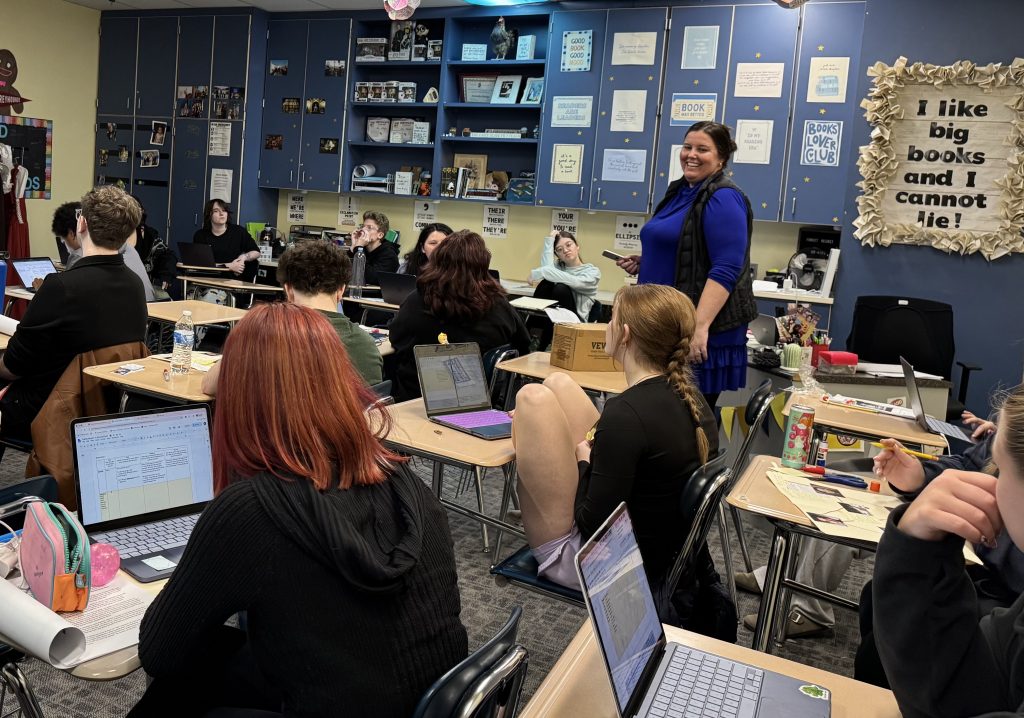
Dr. Olin said, “Both the Mock Trial Club and the True Crime class help students to become critical thinkers, to apply logic, and to write in a persuasive manner. These are great additions to our high school curriculum.”